
Anti-drone steel rope net
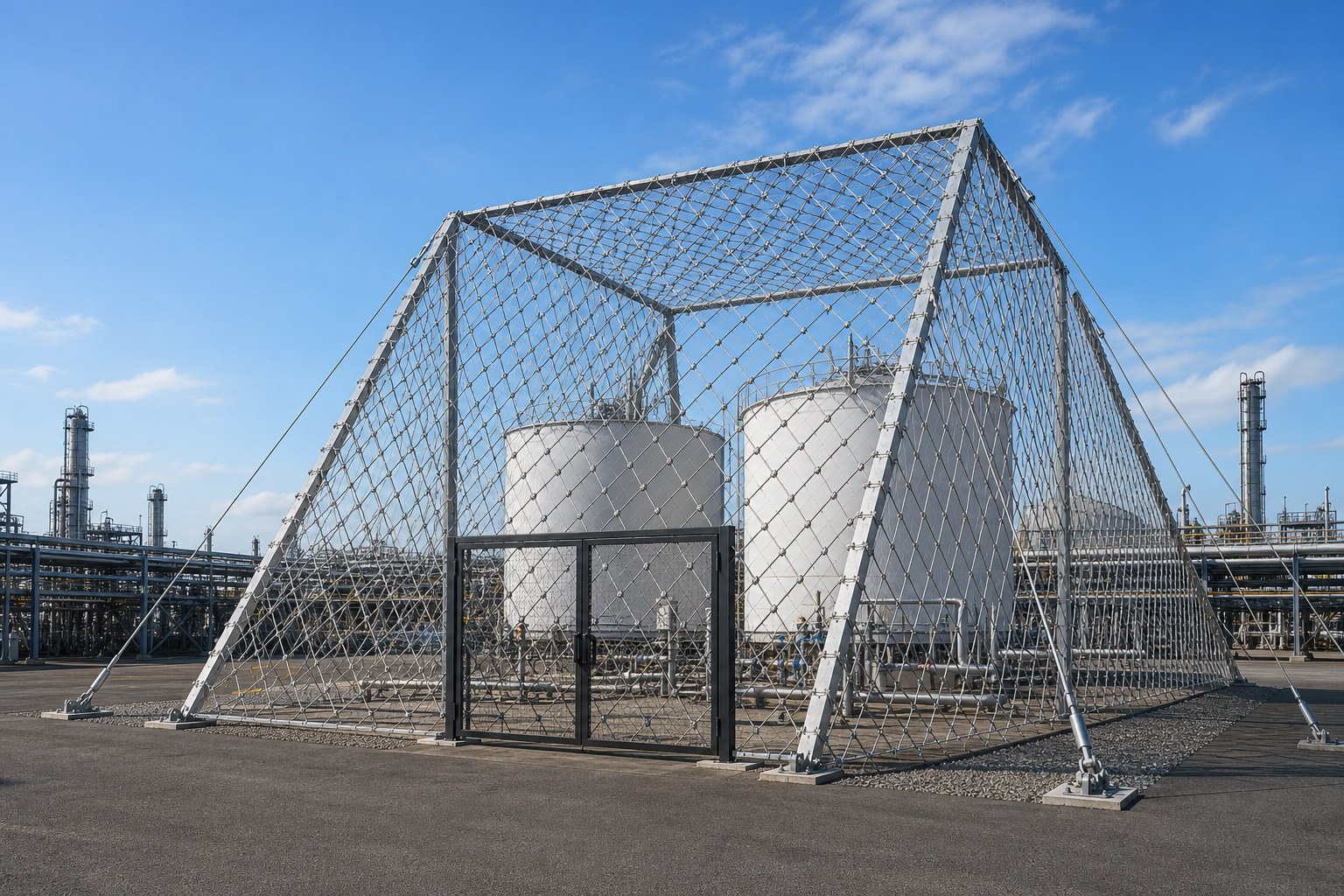
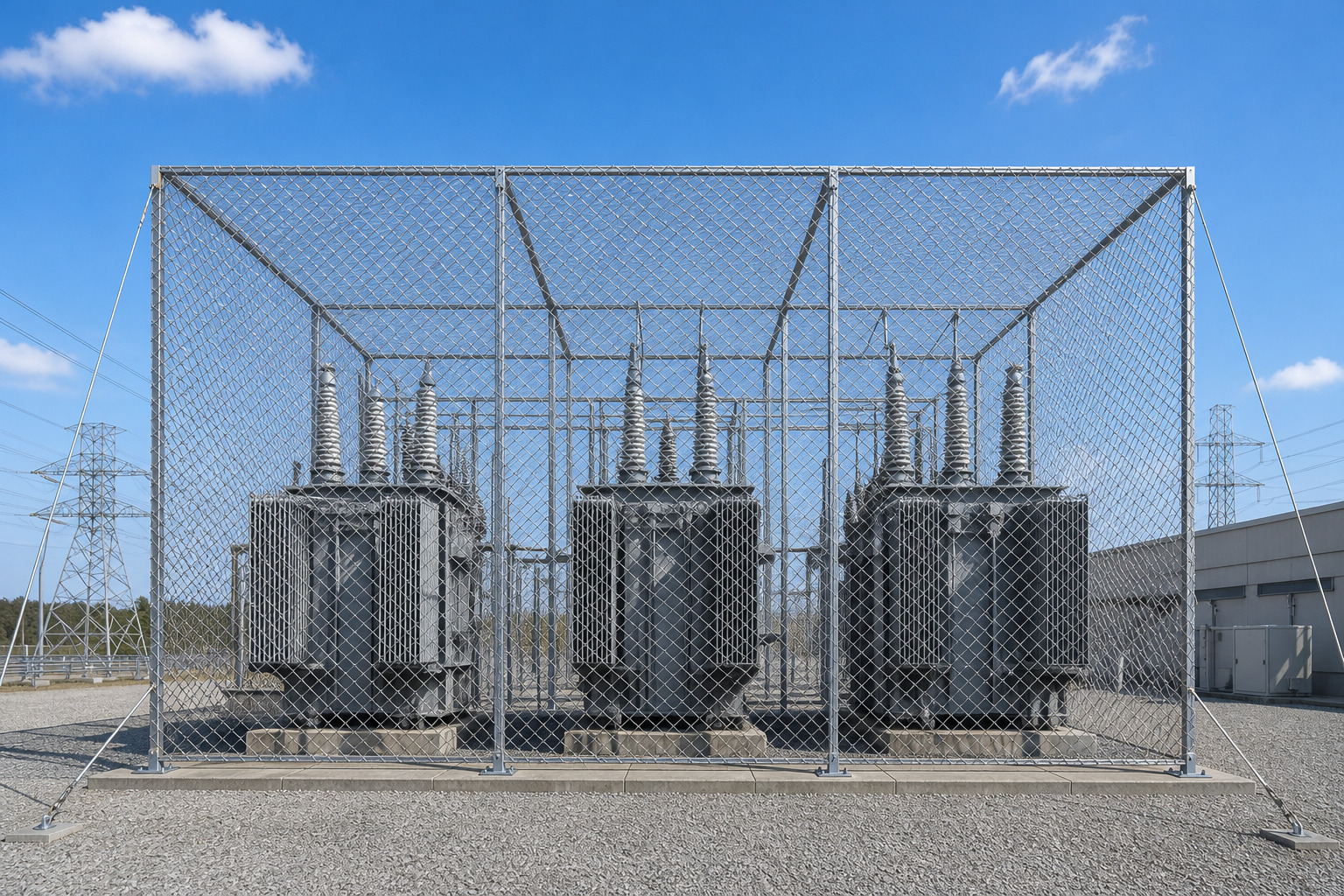
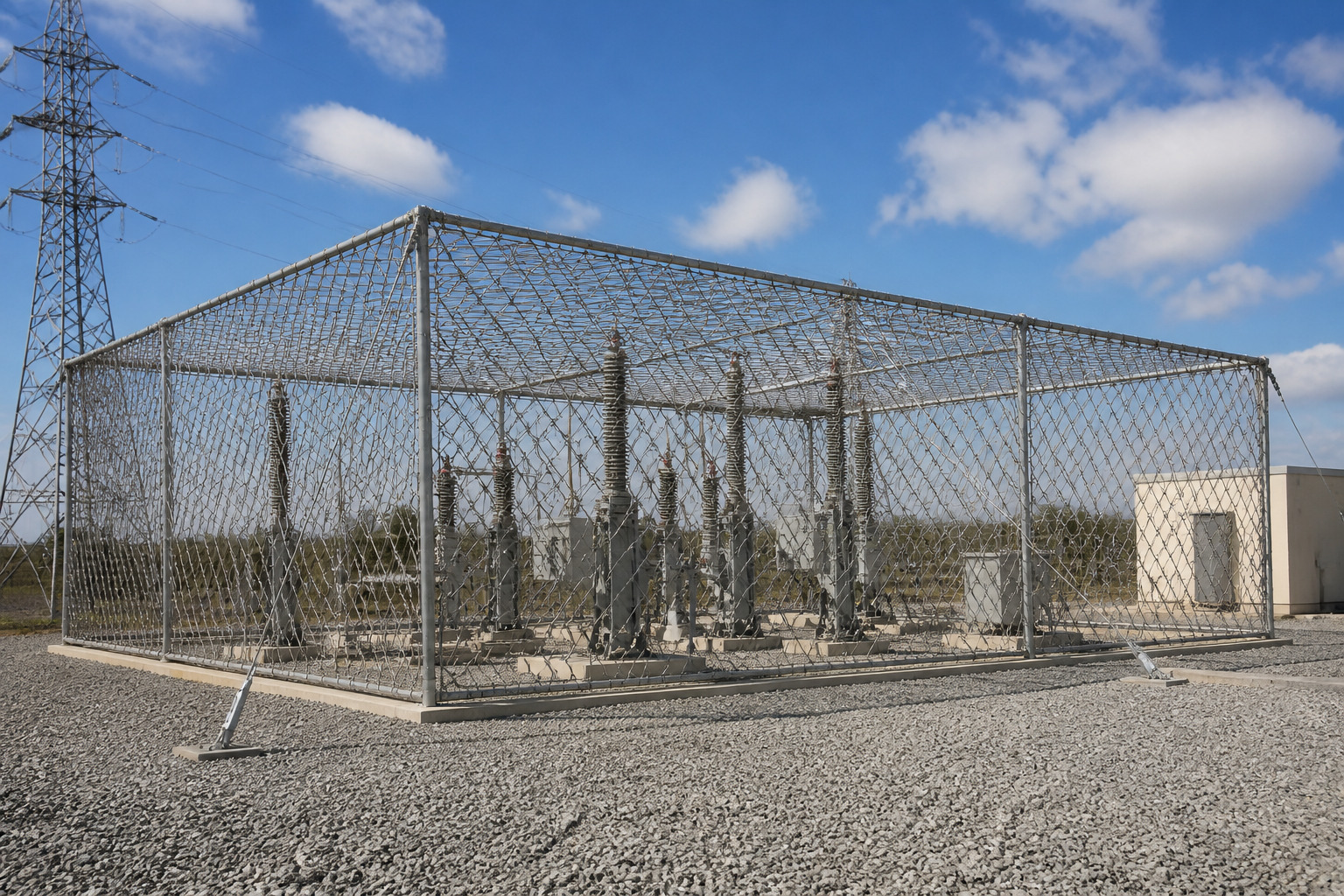
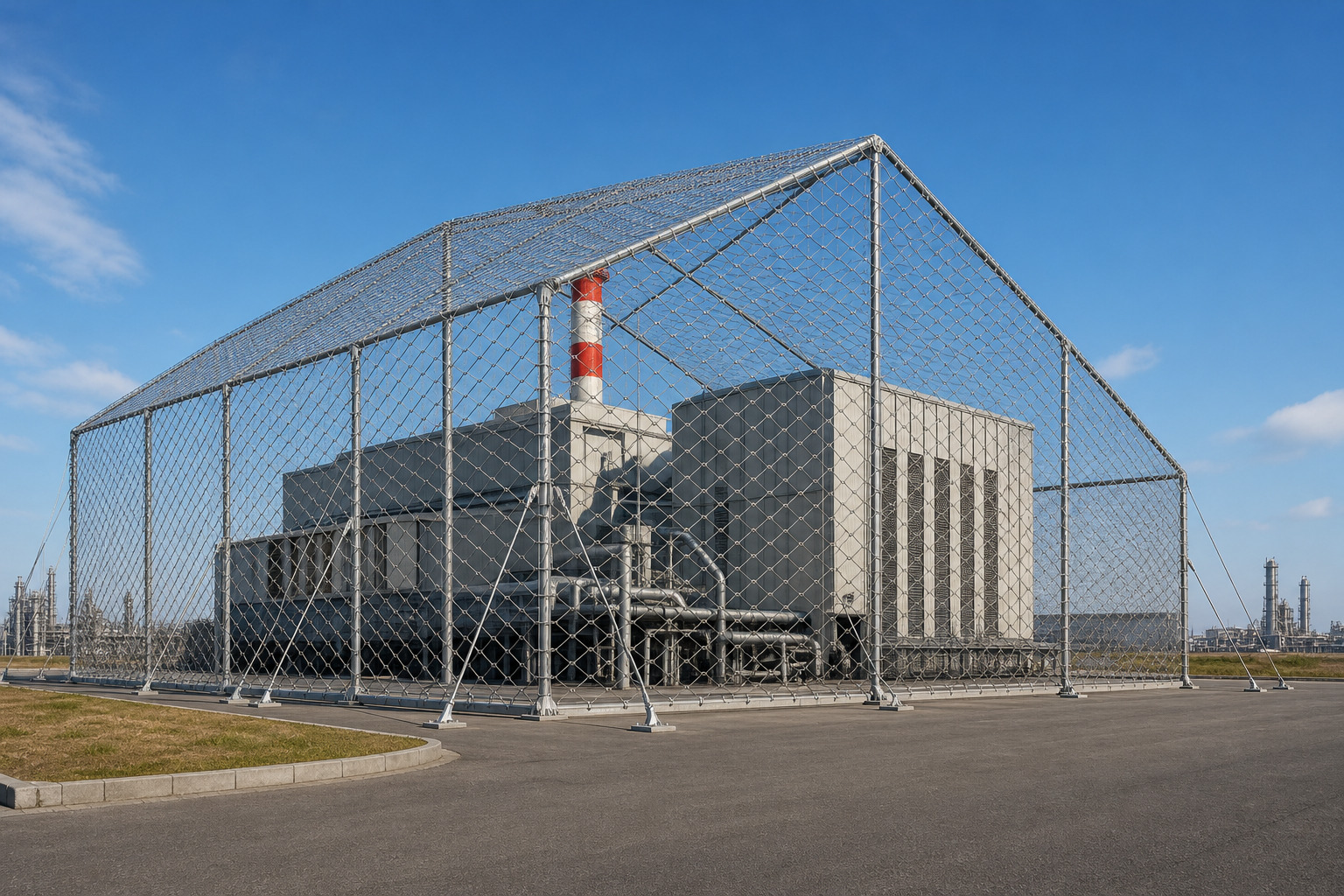
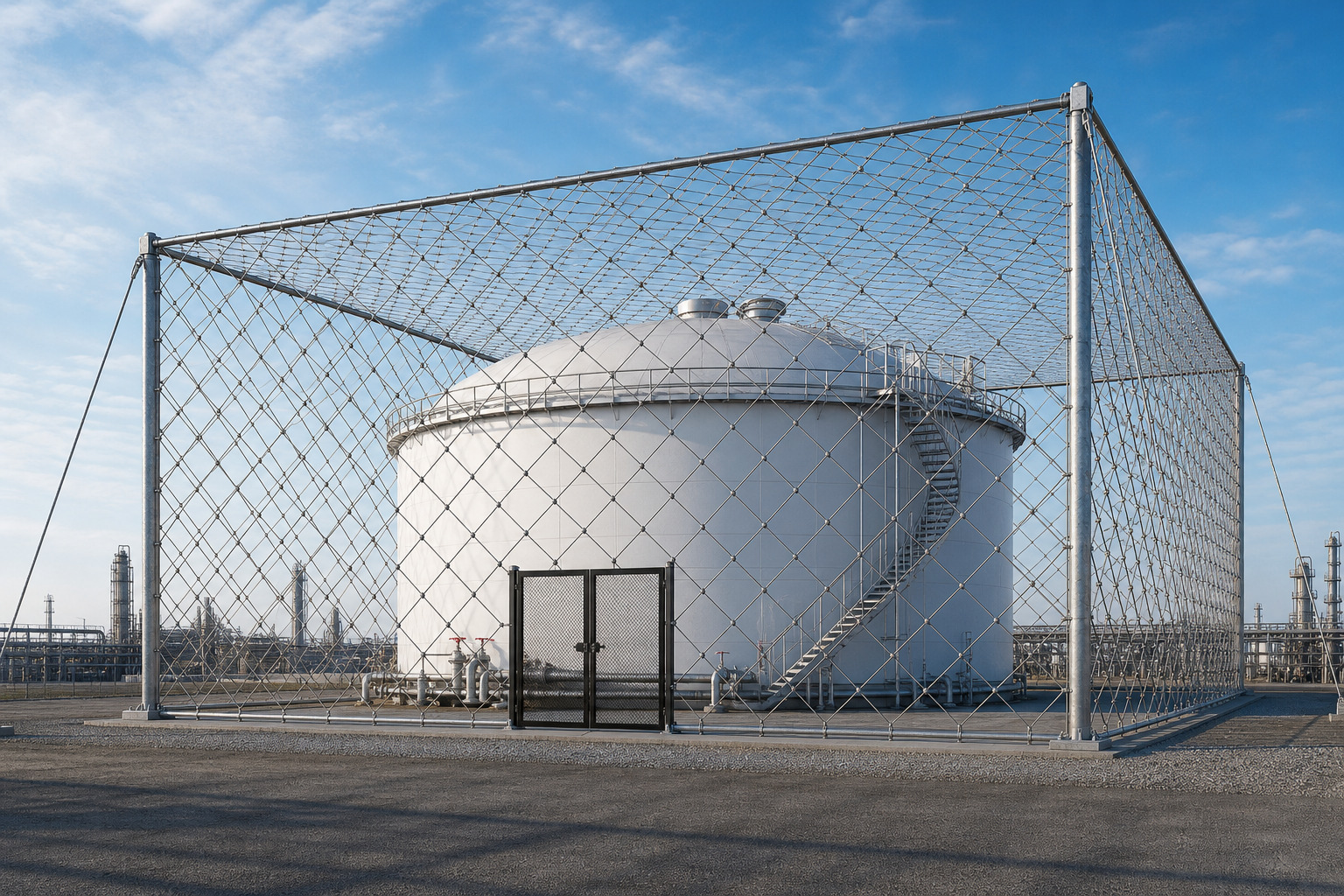
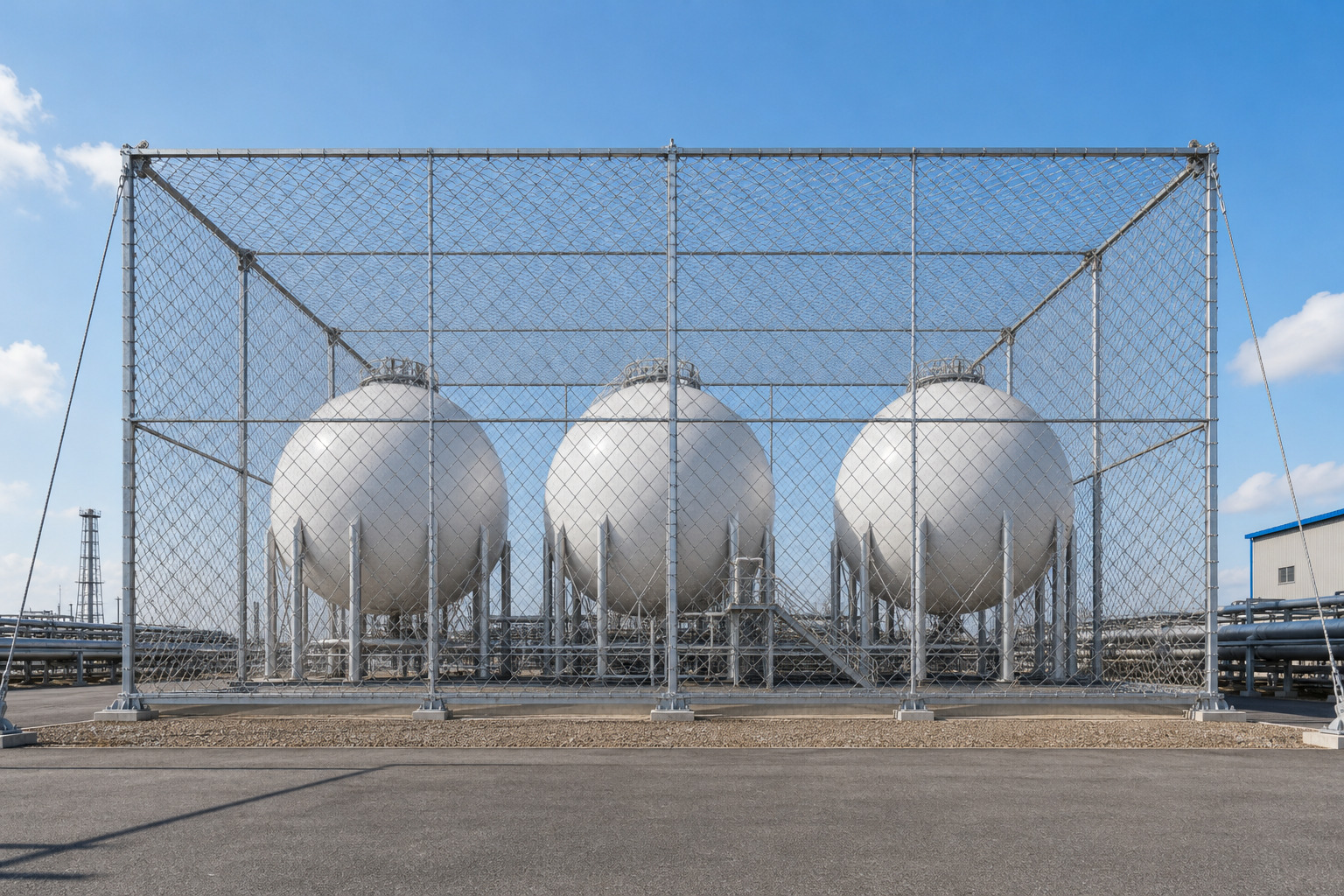
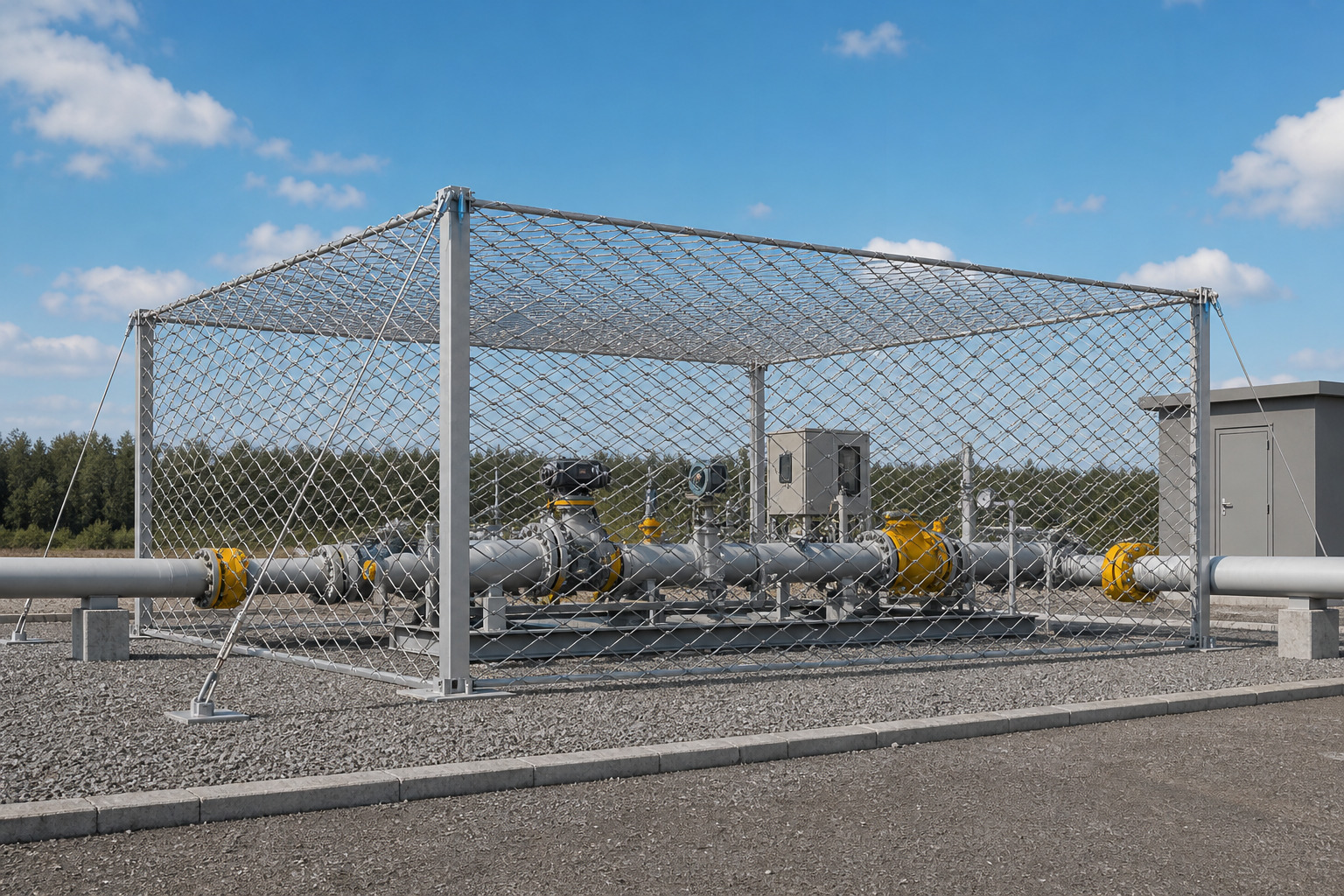
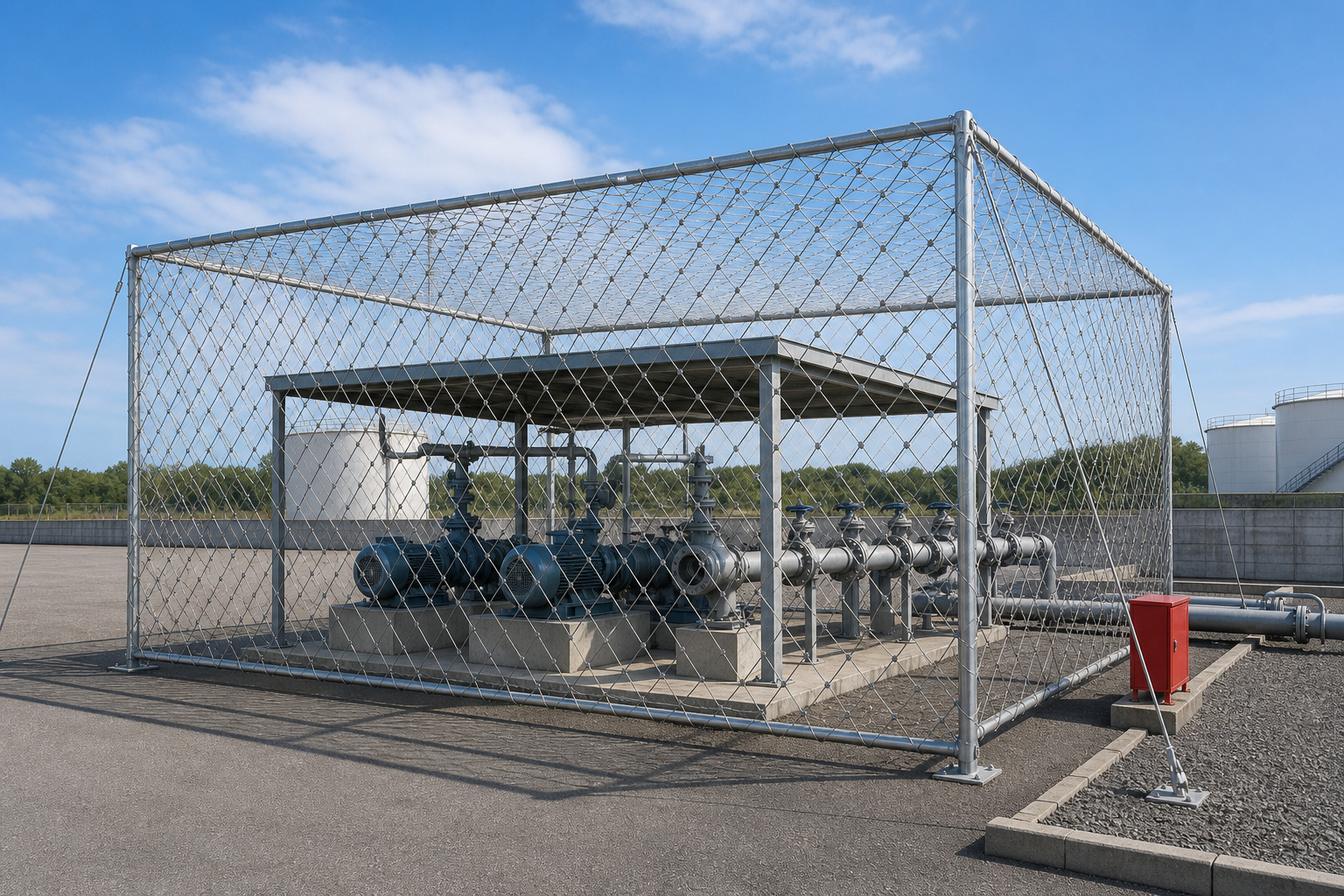
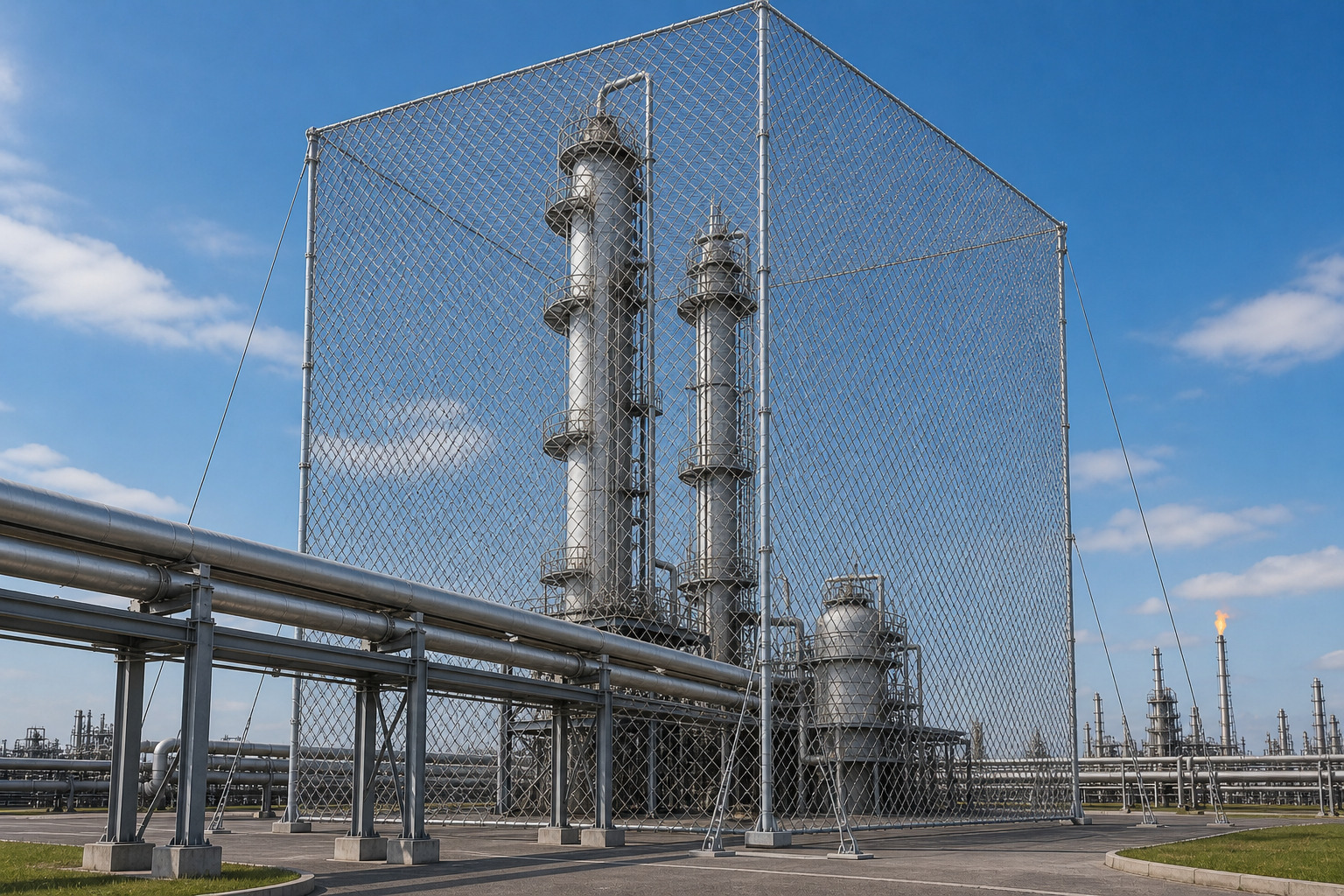
A closed protection contour for substations, tank farms, power blocks and process units. Drone interception before contact with the equipment.
- Passive 24/7 protection — no electronics, no power supply
- AISI 304 / 316 stainless steel — no painting required
- Made to the asset's dimensions, installed in modular sections
Send us the asset dimensions — we will prepare a commercial proposal.
How it works in detail
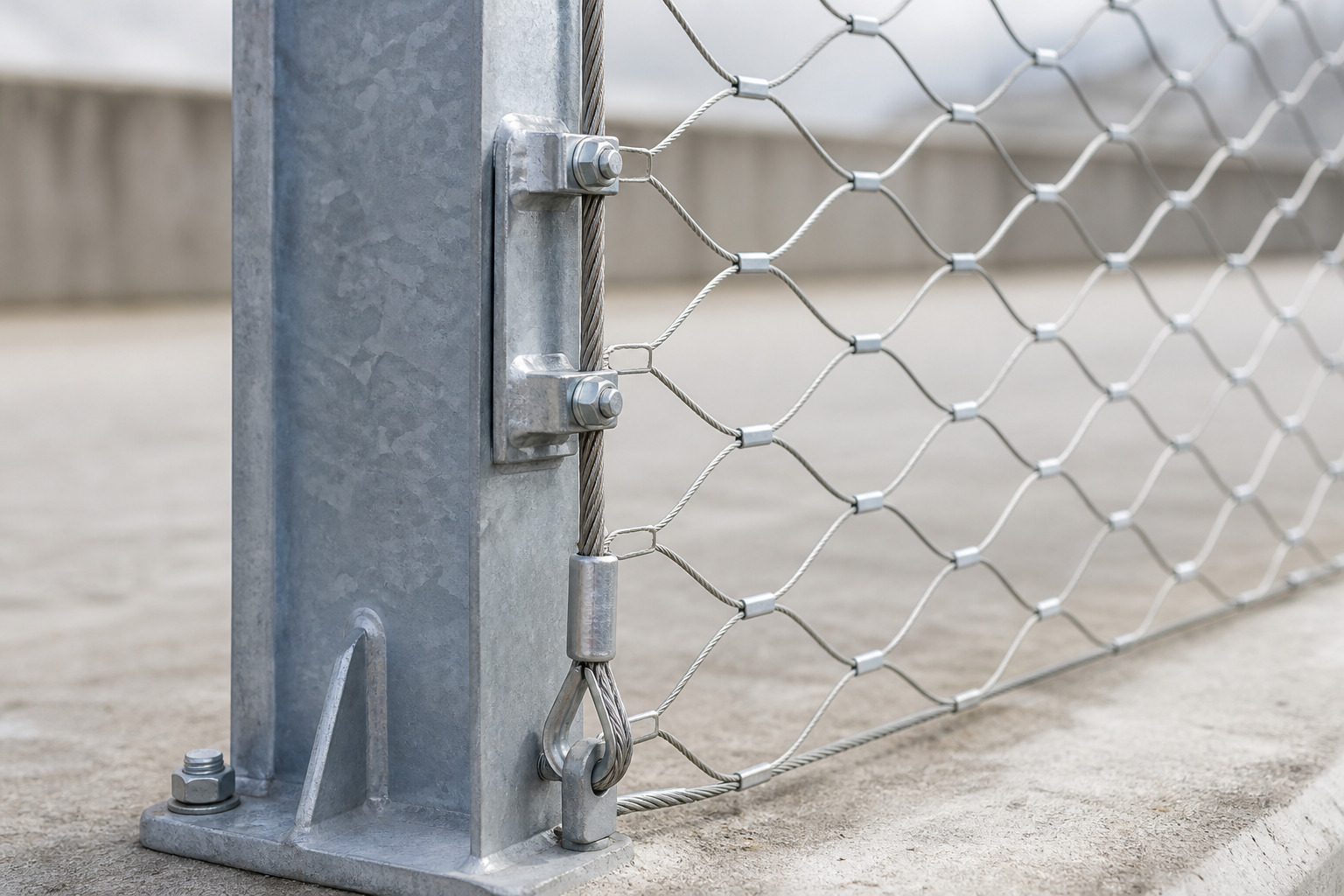
Drone attacks on fuel & energy assets have become a systemic threat
Electronic warfare does not stop autonomous drones flying to preset coordinates. The last line of defence is a physical barrier.
EW does not always work
Autonomous and inertial-guided drones do not depend on a communication channel — jamming does not stop them.
Polymer nets do not hold
Incendiary and cutting warheads easily destroy polypropylene and nylon panels.
One breach — a shutdown
Even partial damage to a tank or transformer means a production shutdown and repairs.
Assets cannot be covered conventionally
Open switchgear and tank farms physically cannot be covered with a permanent structure.
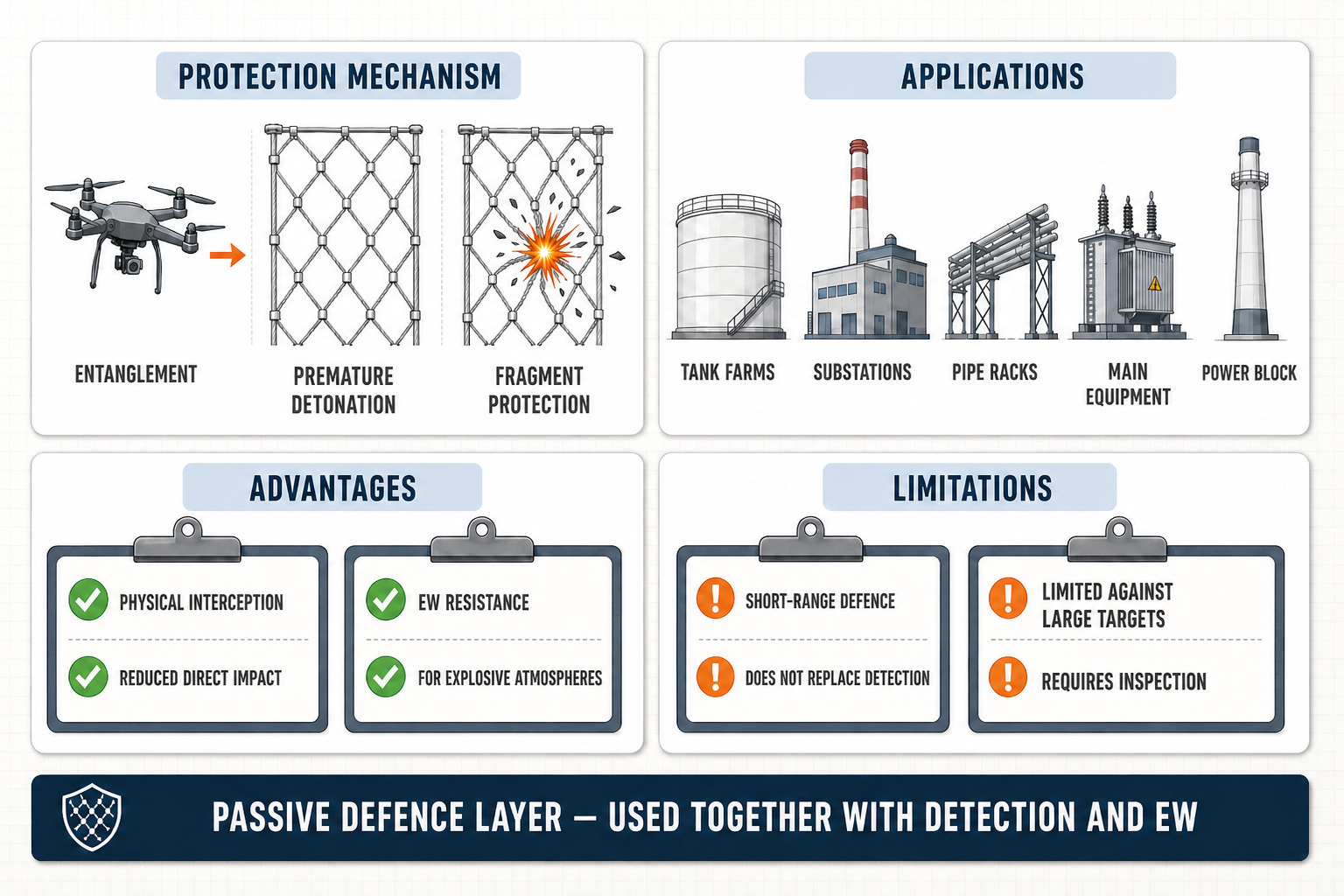
The net intercepts the drone before it reaches the equipment
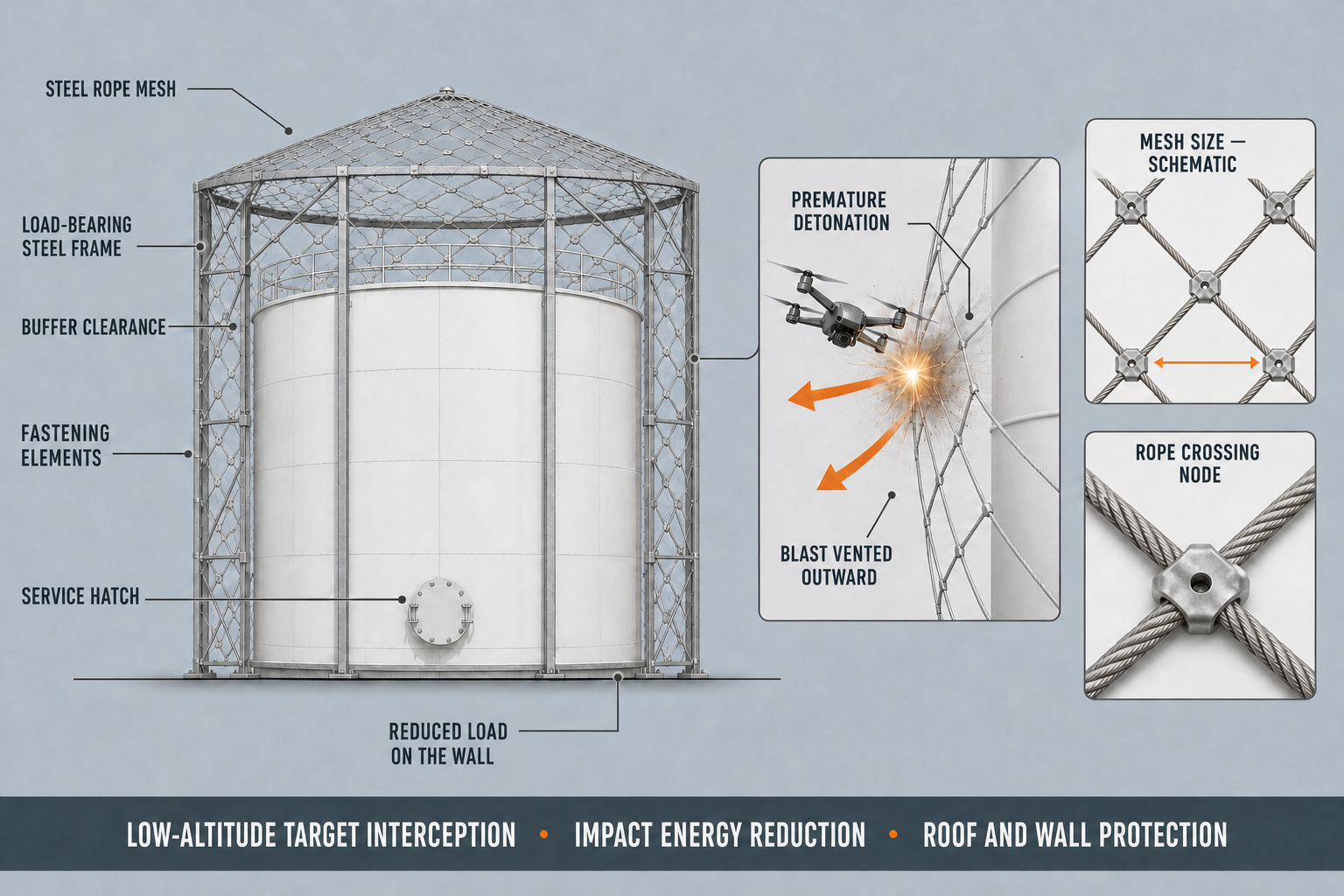
A flexible stainless steel rope net forms a closed volume around the protected equipment. The drone enters the protection zone, loses thrust and falls outside — or detonates prematurely, at a safe distance from the asset.
The drone enters the protection zone
The outer contour of the net is the first physical line of defence on the approach to the equipment.
Rotor entanglement
The blades are caught by the net ropes; the drone loses control and thrust.
Premature detonation
If a warhead is present, it detonates away from the equipment rather than on its surface.
Protection from fragments and blast wave
The net takes the fragments on itself; the buffer clearance reduces the load on the wall and roof.
A closed contour: net over the roof and the entire perimeter
If even one side is open, the drone enters through it and the protection loses its purpose. We design a closed volume: the roof plus four vertical planes anchored to the foundation around the entire perimeter.
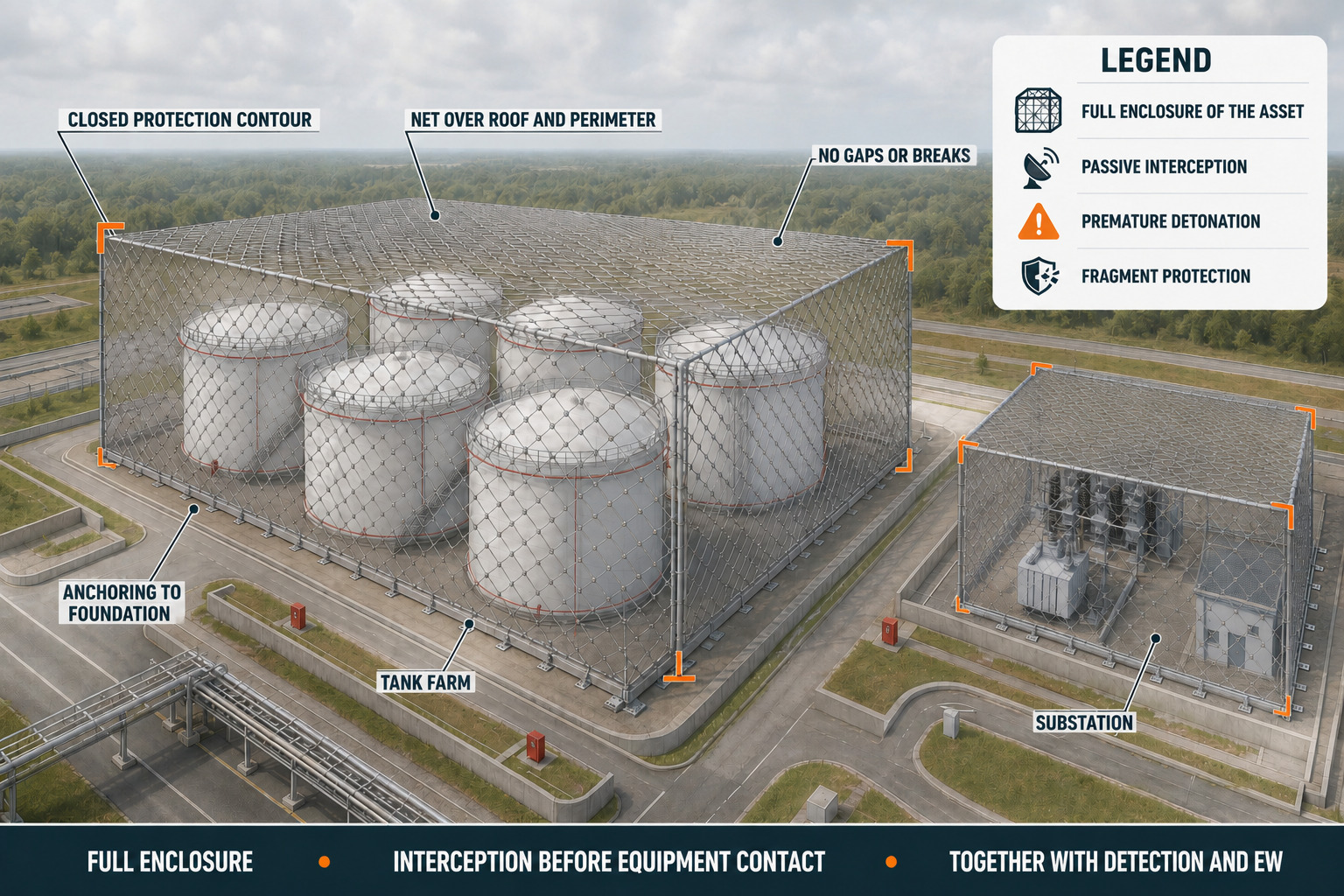
Roof
The horizontal plane blocks entry from above and sheds debris outward.
Four sides
The vertical planes reach the ground and rule out side entry.
Anchoring around the contour
Anchoring to the foundation and base plates around the entire perimeter, plus a tensioning system.
No gaps or breaks
Sections are stitched along the full length; joints and corners are sealed along the contour.
The contour is designed individually: the height depends on the equipment dimensions, and the safe distance from the net to the equipment is set by calculation.
Why steel rope rather than a polymer net
Works without electricity
A passive barrier needs no power, creates no communication interference and does not affect detection or EW systems.
No painting required
AISI 304/316 stainless steel retains its properties in the atmosphere of industrial and coastal sites.
Withstands cutting and burning
Unlike polymer panels, a metal rope is not destroyed by an incendiary or cutting warhead.
Modular design
Supplied in sections; a damaged section is replaced on its own, without dismantling the whole contour.
Made to size
Any geometry and span: a tank, a building block, a group of equipment, an extended area.
Engineering calculation
We account for wind and snow loads, stresses in the supports and safe distances to the equipment.
Design and technical parameters
Typical configurations are shown below. Final parameters are confirmed for each asset and verified by a test report.
Scroll the table →
| Parameter | Configuration A small FPV | Configuration B universal | Configuration C large spans |
|---|---|---|---|
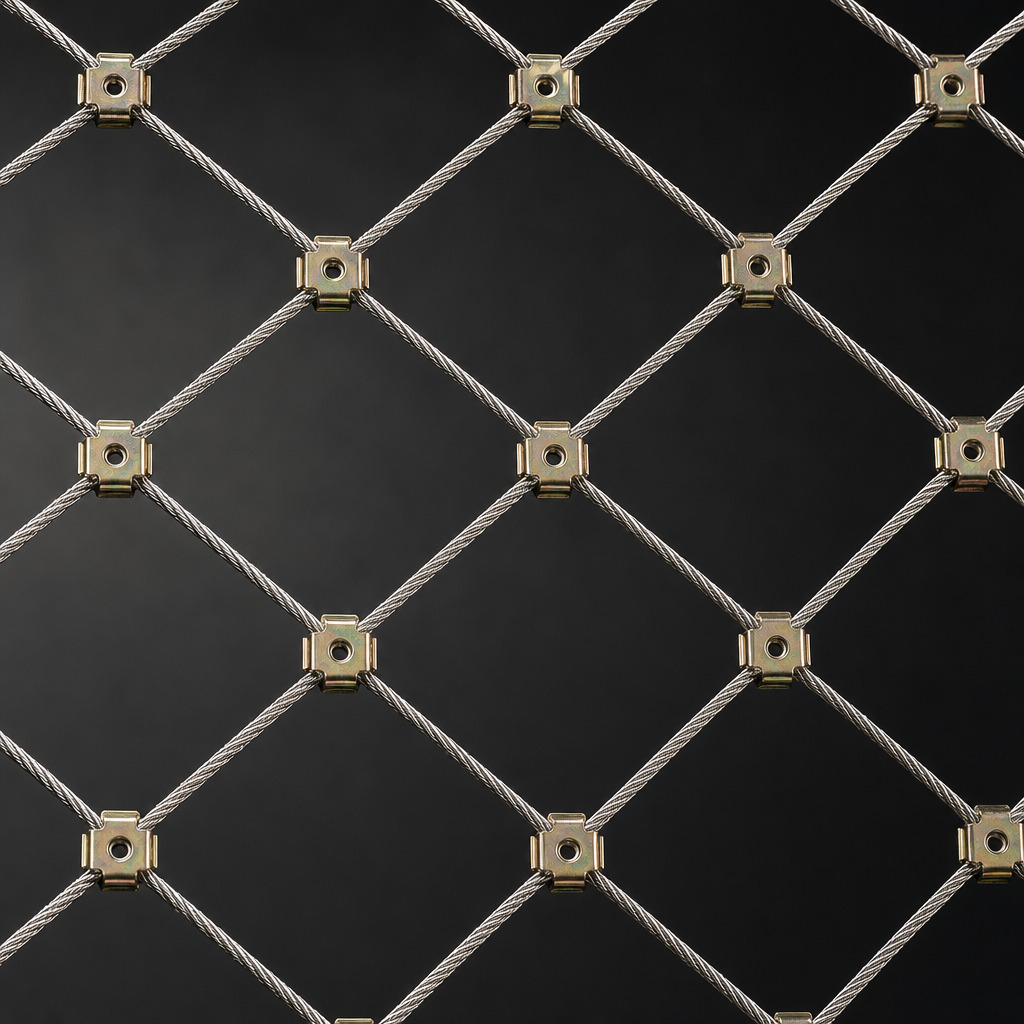
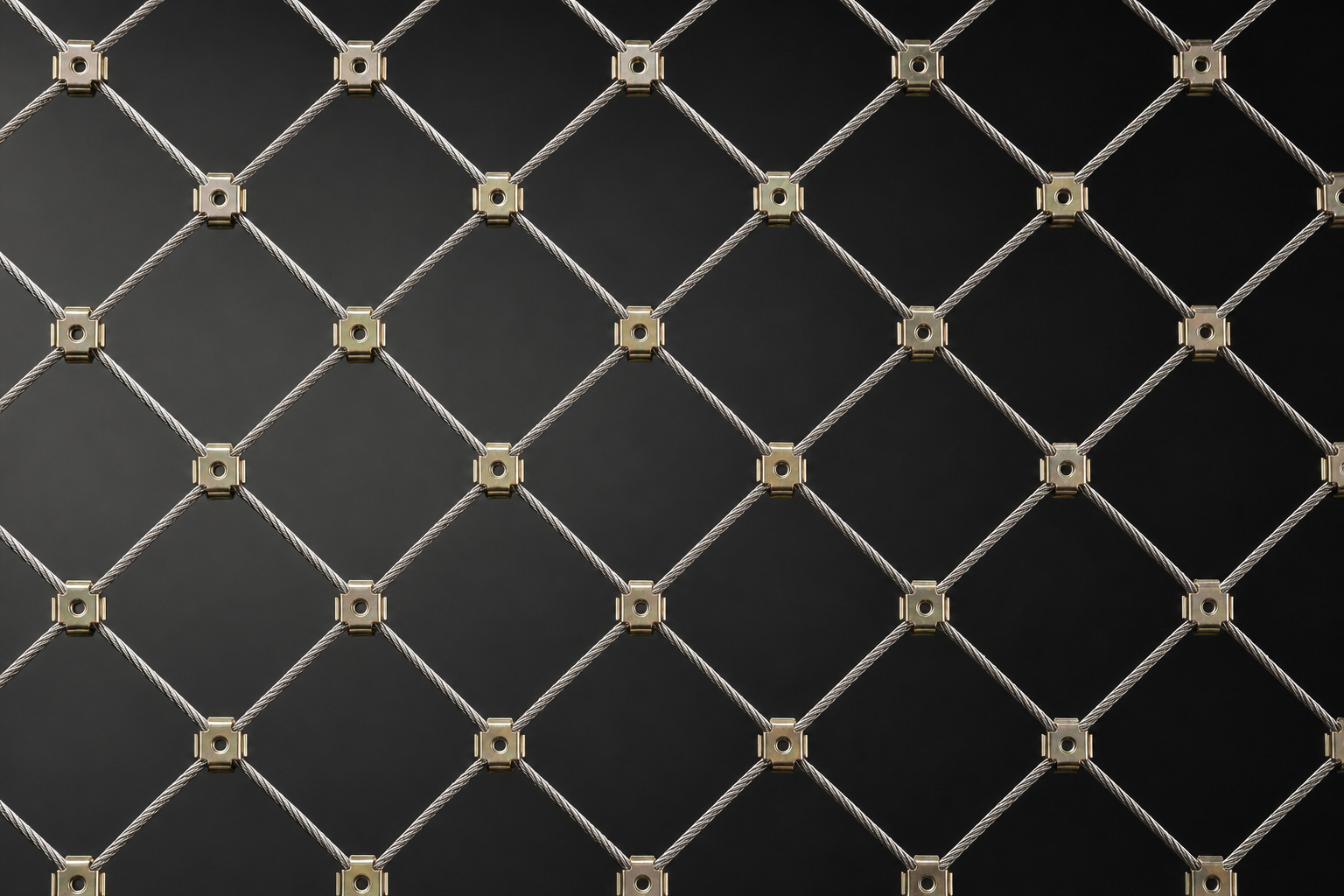
| Mesh opening | 40 × 40 mm | 65 × 65 mm | 100 × 100 mm |
| Rope diameter | 2.5 mm | 3.0 – 4.0 mm | 4.0 – 6.0 mm |
| Rope construction | 7×7 | 7×7 / 7×19 | 7×19 |
| Rope material | AISI 316 / 316L, duplex 2205 | AISI 304 / 304L / 316 / 316L | carbon steel, hot-dip galvanized / AISI 304 / 316 |
| Clamp material | aluminium alloy | aluminium alloy / galvanized steel | galvanized steel / AISI 316 |
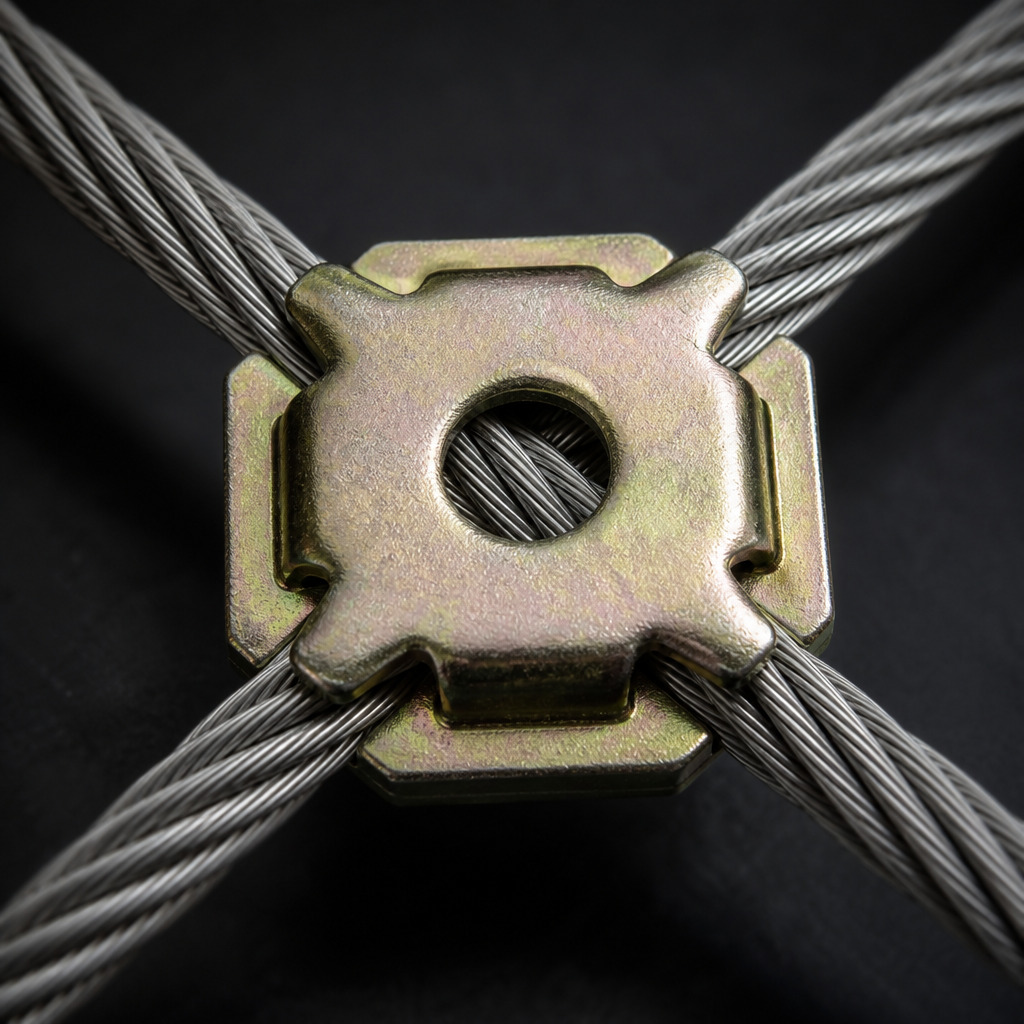
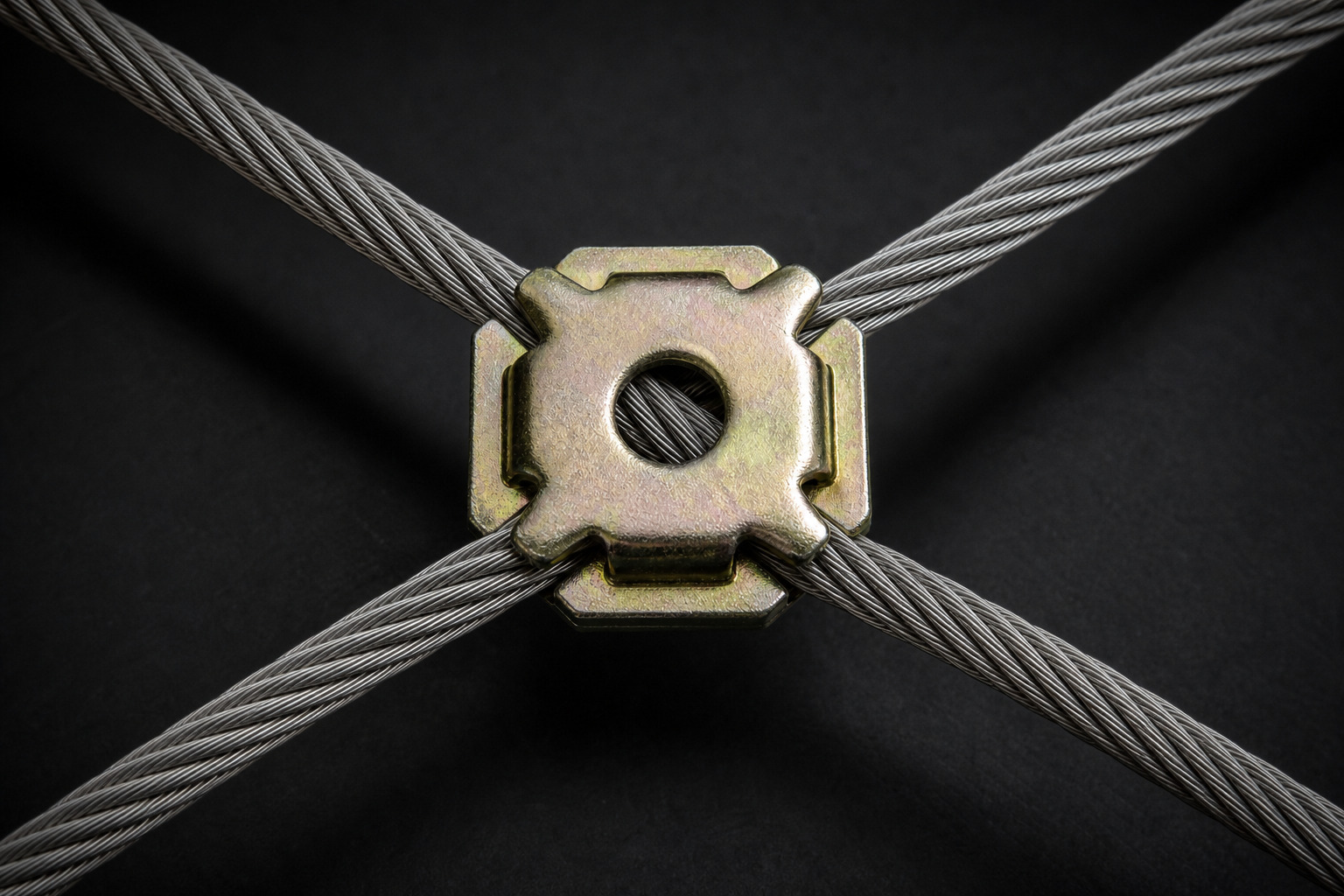
| Clamp type | cross compression clamp (4 channels, central bore) — the node does not come apart on impact | ||
| Coating options | hot-dip galvanizing (ISO 1461) · electrogalvanizing · zinc-aluminium (Zn-Al) · PVC or nylon rope sheath · RAL powder coating | ||
| Breaking strength of the rope (per single rope) | from 3.9 kN (≈ 0.4 tf) | 5.6 – 10.9 kN (≈ 0.6 – 1.1 tf) | 10.9 – 20.5 kN (≈ 1.1 – 2.1 tf) |
| Contour load-bearing cable | Ø 8 – 16 mm, pre-tensioning system | ||
| Height above the equipment | 2 – 4 m (by calculation) | ||
| Safe distance to the equipment | at least 4 – 5 m (by calculation) | ||
| Operating temperature range | −40 °C … +80 °C (typical value) | ||
| Installation | modular sections, stitching cable, anchoring to the foundation | ||
Breaking strength is given per single rope and is verified by the batch test report. The working load is taken with a safety factor of 5–6.
About the data. The values above are recommended design parameters, derived from comparable products on the market, engineering publications on passive protection of assets against UAVs and the typical characteristics of ropes of the corresponding diameter. Final characteristics are confirmed by the project and the factory test report.
Materials and coatings — supply options
Rope and compression clamps are supplied in several versions; the specific one is selected by climate, corrosivity of the environment and the asset's budget.
AISI 304 / 304L stainless steel
Standard version. Dry and moderately humid climate, fuel & energy assets away from the sea. No painting required.
AISI 316 / 316L stainless steel
Increased resistance to chlorides and industrial atmosphere. Humid climate, coastal and chemical sites.
Duplex 2205
Maximum strength and corrosion resistance. Sea coast, chloride and aggressive environments.
Carbon steel, hot-dip galvanized
ISO 1461 coating. The most economical solution for large areas and extended contours.
Electrogalvanizing · zinc-aluminium (Zn-Al)
A thin coating for light structures; zinc-aluminium provides increased atmospheric durability.
PVC or nylon rope sheath
Protection against abrasion, reduced noise, colour options to suit the site.
The clamp material — aluminium alloy, galvanized or AISI 316 stainless steel — is selected to match the rope material and operating environment. RAL powder coating is available.
Three typical configurations for different tasks
The configuration is selected by target type and asset geometry. Any combination of parameters is possible per project.
Small FPV drones
- Mesh 40 × 40 mm
- Rope Ø 2.5 mm, 7×7
- AISI 316 / 316L, duplex 2205
- Breaking strength from 3.9 kN (≈ 0.4 tf)
Universal
- Mesh 65 × 65 mm
- Rope Ø 3.0 – 4.0 mm, 7×7 / 7×19
- AISI 304 / 304L / 316 / 316L
- Breaking strength 5.6 – 10.9 kN (≈ 0.6 – 1.1 tf)
Large spans
- Mesh 100 × 100 mm
- Rope Ø 4.0 – 6.0 mm, 7×19
- carbon steel, hot-dip galvanized / AISI 304 / 316
- Breaking strength 10.9 – 20.5 kN (≈ 1.1 – 2.1 tf)
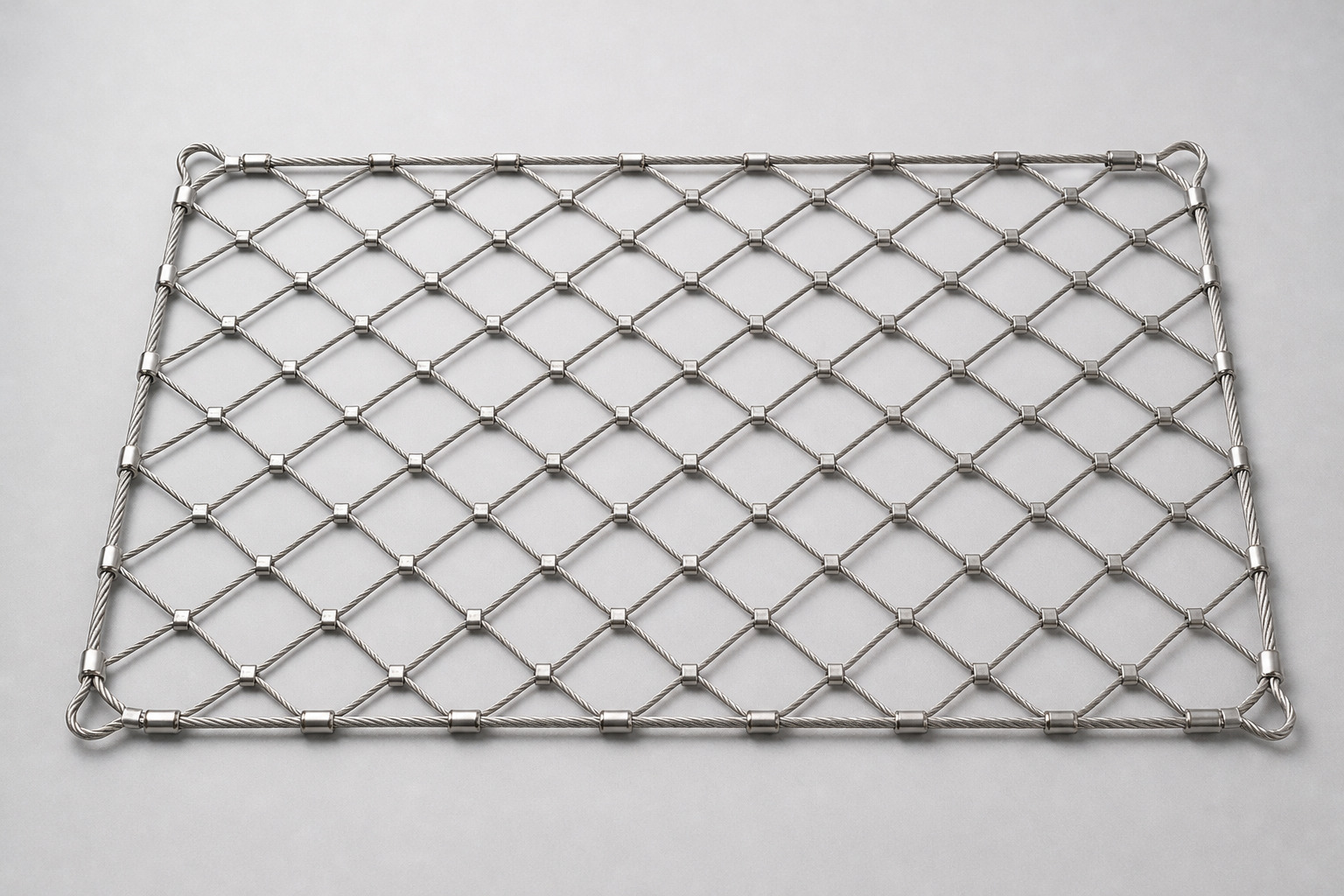
What is included in the supply
- Mesh sections to the asset's dimensions
- Load-bearing and stitching cable, fixing and tensioning units
- Cross compression clamps, anchor elements
- Installation drawing and section schedule
- Breaking strength test report
What we cover
The closed contour is designed for each asset: dimensions, elevations, existing structures and safety requirements.
Cannot find your asset type? Send a drawing or photographs — we will select a configuration and calculate the cost.
Steel rope net versus other solutions
A passive barrier does not replace detection and EW — it works together with them and remains the last line of defence that cannot be jammed.
Scroll the table →
| Solution | Physical interception | Needs electricity | Holds against cutting and burning | Communication and EW interference | Maintenance |
|---|---|---|---|---|---|
| Steel rope net | Yes | No | Yes | No | Inspection, section replacement |
| Polymer net (PP / PA) | Yes | No | No | No | Replacement on UV ageing |
| Welded / twisted mesh | Yes | No | Partly | No | Repair on deformation |
| Nylon / aramid | Yes | No | No | No | Limited service life |
| EW systems | No | Yes | — | Yes | Setup, licences |
| Active interception | Yes | Yes | — | — | Standby crew |
The comparison is based on the physical principle of each solution. Requirements for a specific asset are set by the project and applicable standards.
From enquiry to delivery
Enquiry and preliminary selection
You send the asset type and dimensions. We select a preliminary configuration and an indicative cost.
Clarifying the asset data
Elevations, existing structures, wind and snow loads, safe-distance requirements.
Calculation and commercial proposal
We prepare the section specification, layout drawing and a commercial proposal with price and lead time.
Manufacturing and delivery
Manufacturing to the project, packing in rolls and transport to the site.
Installation and acceptance
On request — installation supervision and design supervision, acceptance of the contour with tension verification.
Packing and shipping
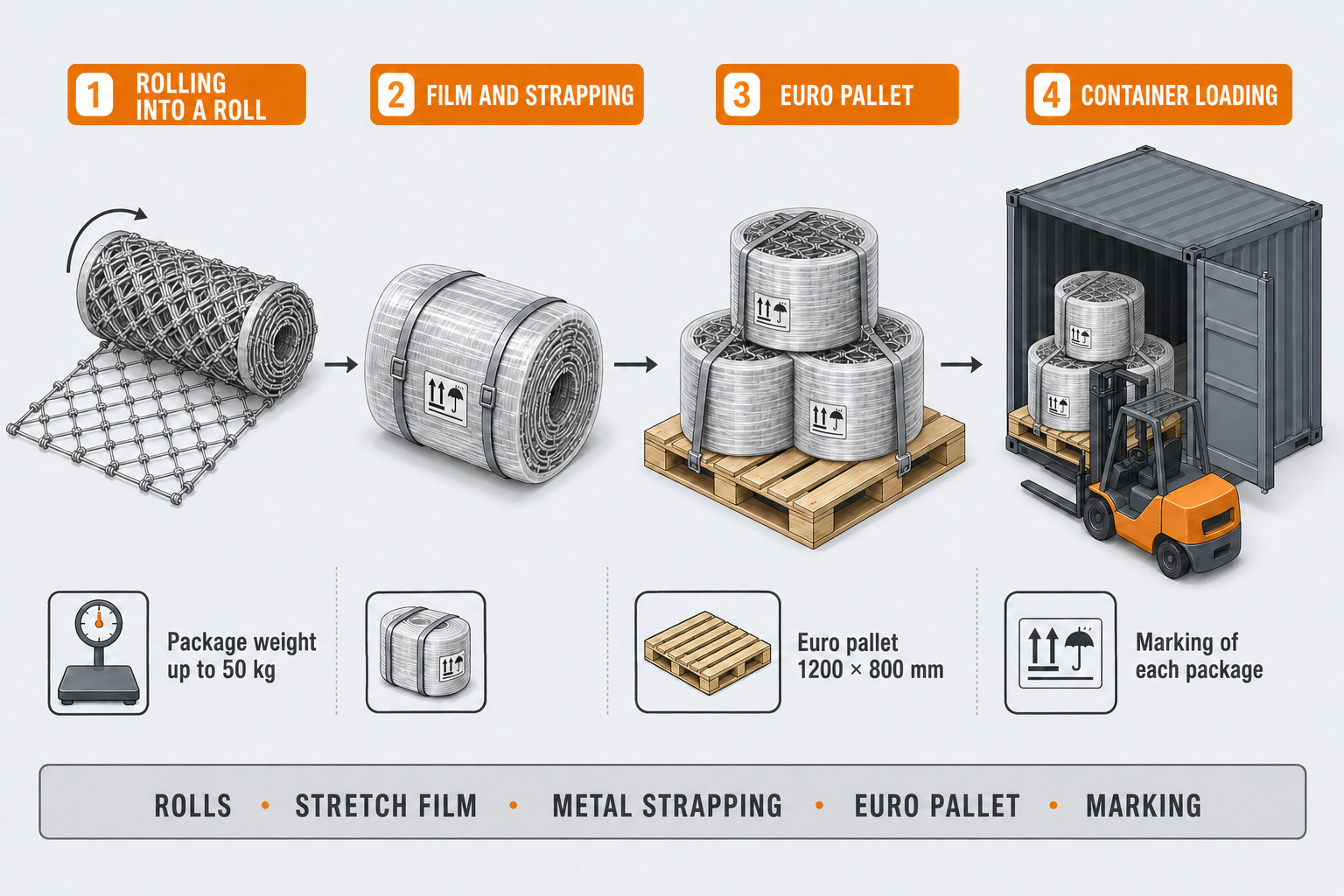
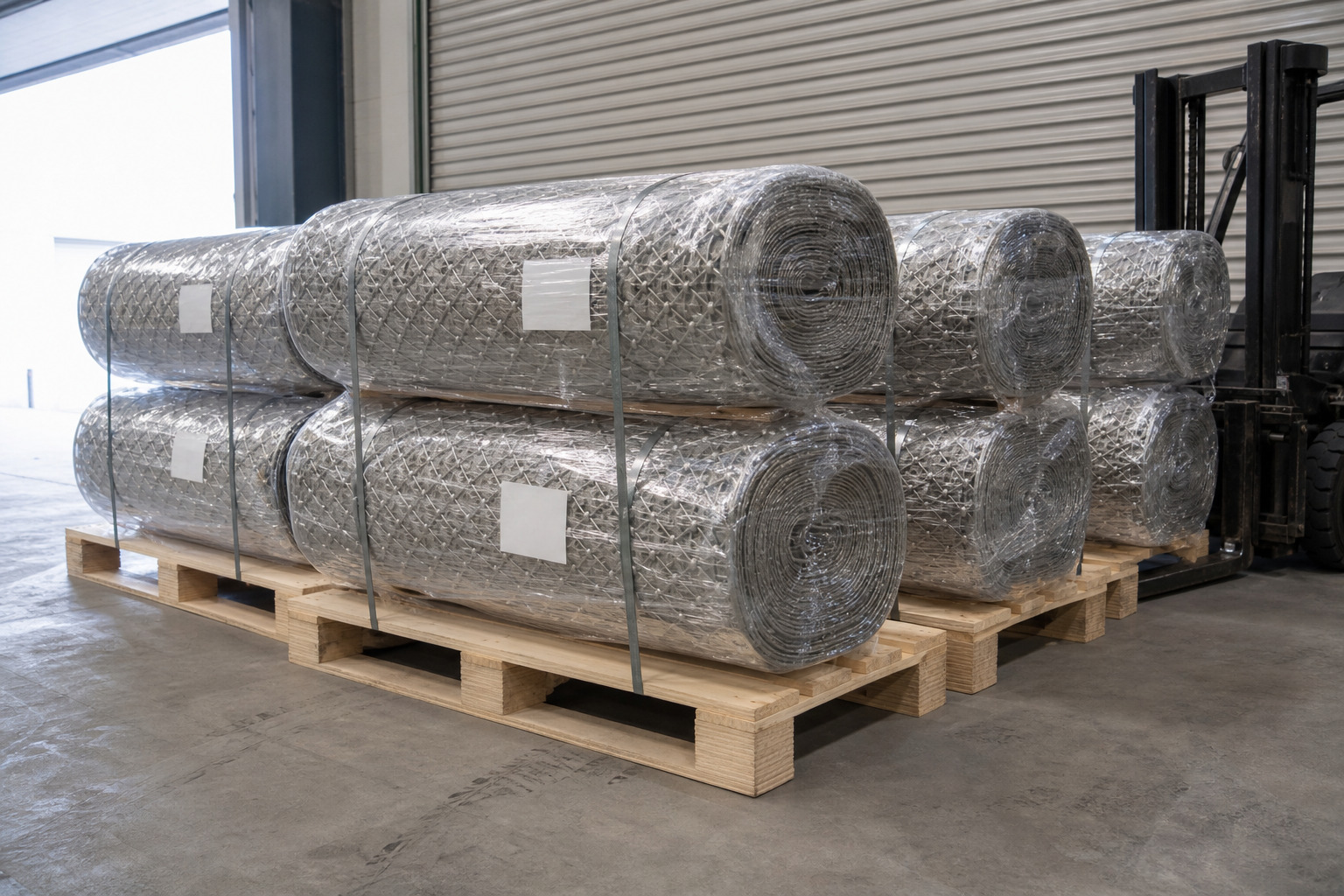
The net is shipped in transport packaging designed for sea, rail and road transport. Each package is marked and secured according to the loading plan.
Rolls
Panels are rolled up; the edge is protected from fraying. Weight of one package — up to 50 kg.
Film and strapping
Stretch film over the entire surface plus metal strapping in two belts; corners are protected.
Euro pallet 1200 × 800
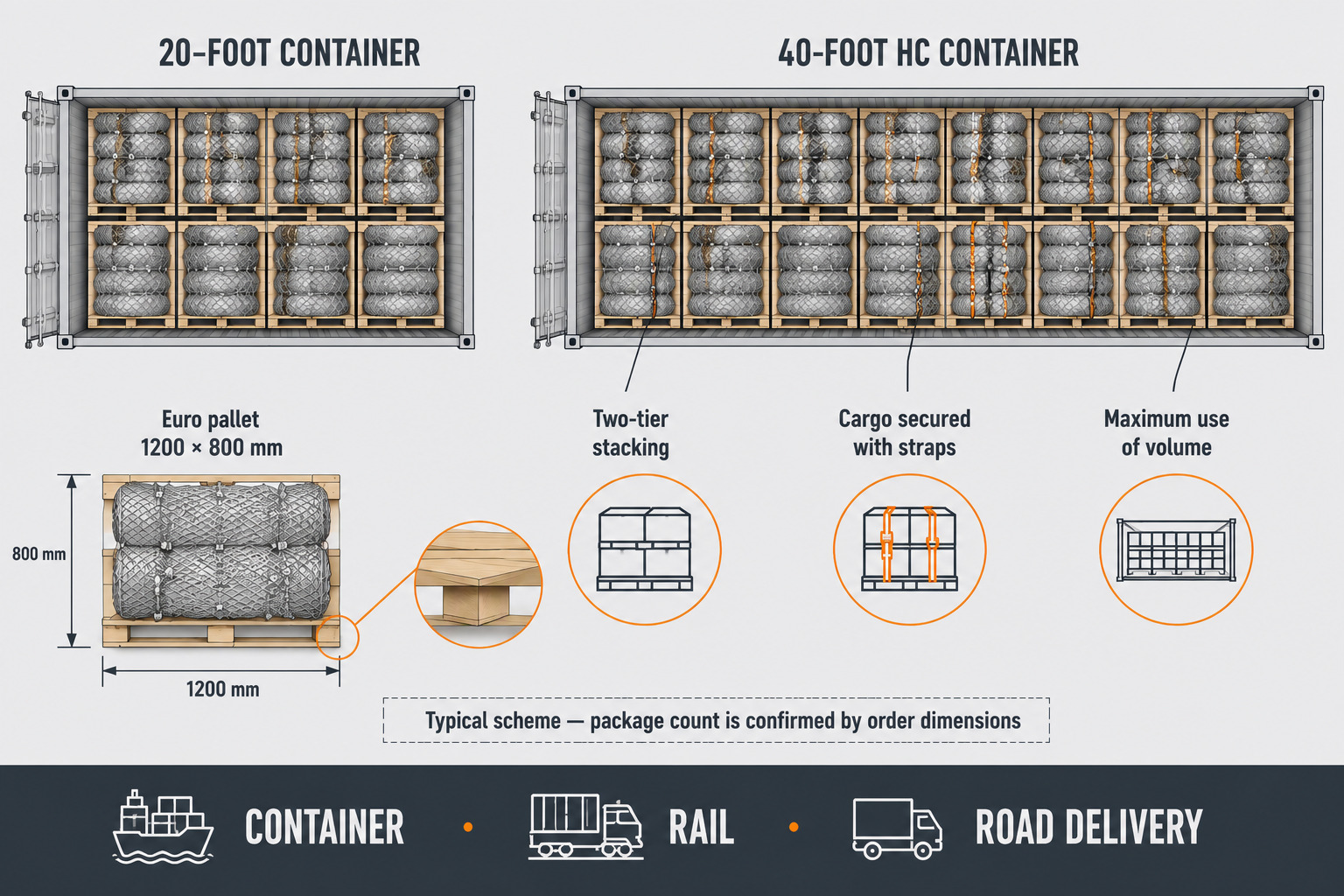
Rolls and flat sections are stacked on pallets, secured with strapping, in two tiers if required.
Marking
On each package: item code, mesh size, rope diameter, configuration and number of packages.
Document set
Packing list — list of packages with dimensions and weight.
Factory test report — rope breaking strength and batch number.
Product data sheet and certificates — for the rope material and coating.
Photo report before shipment — photos of packed packages and container loading.
Delivery terms
By container, rail or road, worldwide. Base terms (EXW, FOB, CIF, CPT) and the lead time are agreed in the commercial proposal.
The packing and layout scheme shown is typical: the number of packages, weight and container loading are calculated for the dimensions of each order and recorded in the packing list.
Frequently asked questions
Is electricity or standby personnel required?
What mesh size is needed against small drones?
Will the net hold a large drone or a warhead?
Can the net be fixed to existing structures?
Does the net hinder equipment maintenance?
What is needed to get a price?
Download the PDF catalogue
Technical specifications, fixing details, installation diagrams and delivery terms in one file. Can be passed to a designer or a client. The current catalogue is in Russian.
Send us the asset dimensions — we will calculate the cost
Specify the asset type and dimensions. We will prepare a configuration, section specification and commercial proposal. If data is still limited — write to us and we will clarify the details ourselves.